Artist Biography

Born and raised in Puerto Rico, Ricardo Rosa’s artistic journey began at an early age, with his first experience in the business of art happening at just ten years old. A self-taught artist, he has been drawing since he can remember, with a natural inclination toward expressive and colorful compositions. Inspired by the vibrant culture of his homeland, Ricardo Rosa draws influence from the impactful works of John Singer Sargent and Francisco Oller—artists who masterfully combined technique with hidden symbolism and deeper meaning. Like them, he seeks to create art that resonates beyond the surface, using floral and dynamic forms to showcase beauty while subtly reminding himself and the viewer of life’s impermanence. Through movement, color, and form, his work captures the delicate balance between transience and lasting impact. Over the years, he has honed his craft through private studies in drawing foundations, human facial studies, and acrylic painting.
Currently based in Indiana, Ricardo works across both 2D and 3D mediums, considering himself a multimedia artist. His artistic practice extends beyond traditional painting, incorporating floral sculptures that bridge the gap between fine art and nature. He has exhibited his work in venues such as Newfields Indianapolis Museum of Art, the Mall of San Juan, and Liga de Arte de Puerto Rico.
Looking ahead, Ricardo aims to establish himself as a prominent artist in Indiana and contribute to the growth of the region’s Latino artist community. His goal is not only to refine his craft but also to create opportunities for emerging artists by sharing his knowledge and experiences. He envisions a future where his work serves as a bridge between cultures, celebrating heritage while embracing innovation.
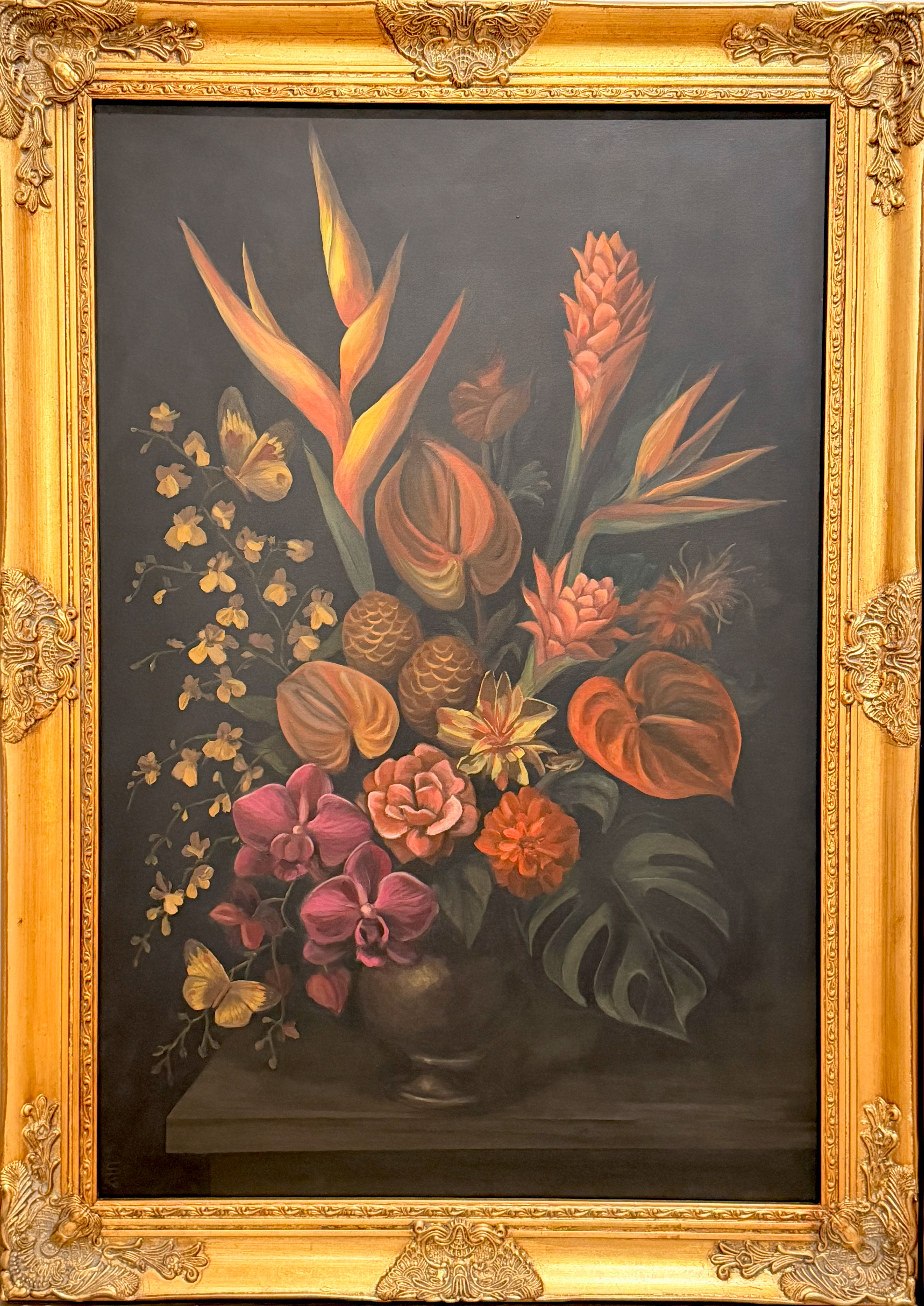
Both Sides of the Table I
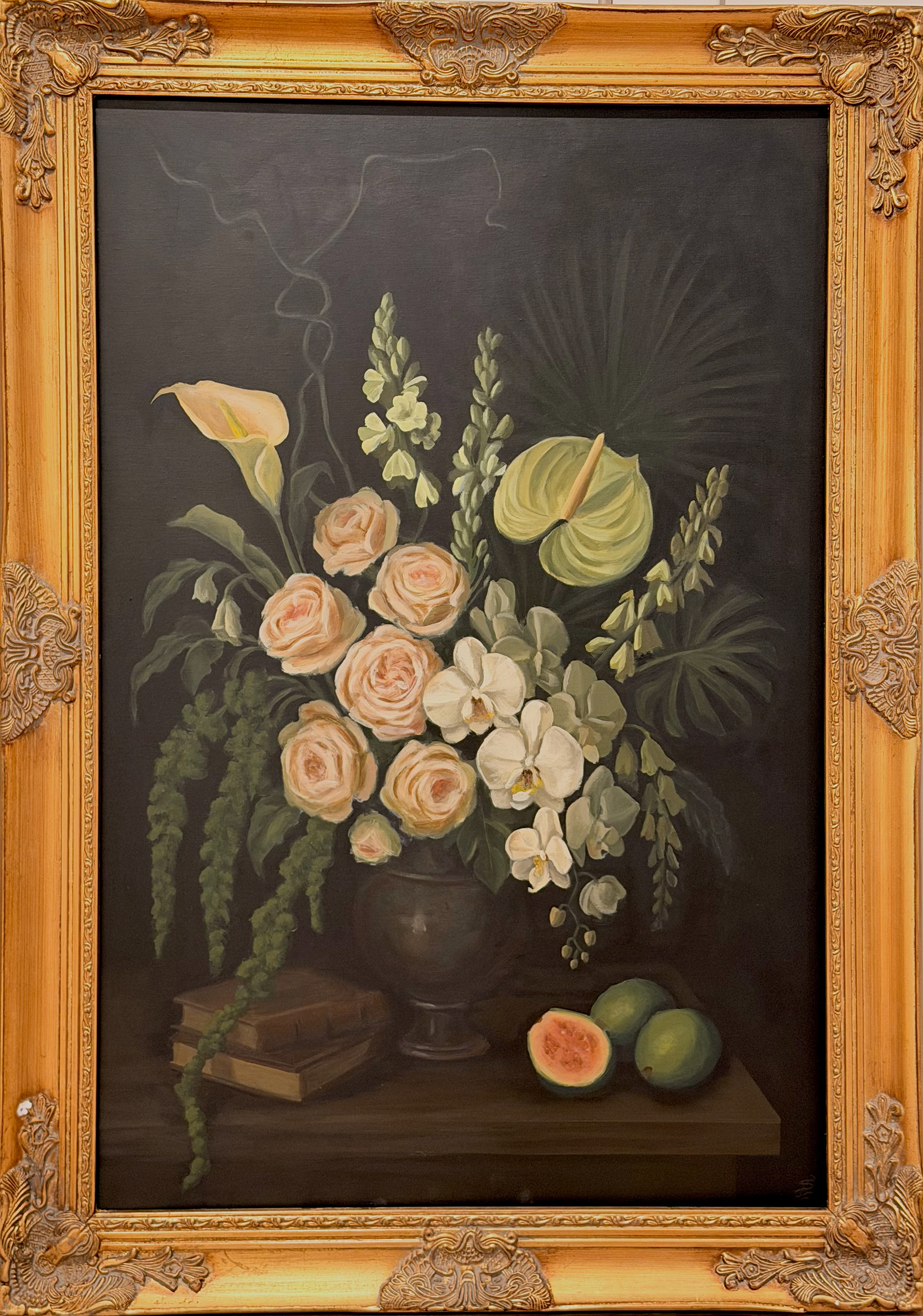
Both Sides of the Table II
Artist Statement
In Both Sides of the Table, I explore the dialogue between two worlds that coexist within me—Puerto Rico, the island that shaped my roots, and Indiana, the place where I continue to grow. The diptych shares a single tabletop that visually connects both canvases, yet each side reveals a distinct emotional landscape. On one side, vibrant tropical flowers burst with warmth and energy, echoing the abundance and vitality of my homeland. On the other, soft whites and greens convey serenity, reflection, and the quiet strength found in adaptation.
Together, the two paintings become a metaphor for identity across distance. They honor the treasures of Puerto Rico—the land, the flora, the spirit—while acknowledging how those same treasures evolve when carried into a new environment. Subtle symbols such as guavas, books, and a hidden coquí bridge the gap between cultures, inviting viewers to reflect on what remains constant even as we change. Both Sides of the Table celebrates belonging not as a single place, but as the space between them—where heritage and transformation meet in harmony.